Medicine in Blood Lab is mainly a bleeding-control and survival system. The confirmed choice is Bandage: use it on a living, treatable Test Subject to help stop or reduce bleeding and preserve its ability to survive. Chest Seal, Medicine, and Defibrillator are available Medicine entries, but their exact healing, wound, or revival effects are not confirmed. Treat them as tools to test rather than guaranteed solutions.
Blood Lab Medicine at a glance
Use the table to choose what to try first. The effect column deliberately separates confirmed behavior from an unverified purpose, so you do not waste a scarce treatment item or assume that a stopped bleed means a full recovery.
| Medicine tool | Supported use | How to access | Important limit |
|---|---|---|---|
| Bandage | Treats an injured target and helps stop or reduce bleeding | Find it in the experiment environment; the wiki reports an approximate 3-minute refresh | The target must still be treatable; the refresh is approximate |
| Chest Seal | Possibly related to chest wounds; exact result is unconfirmed | Select it from the Medicine toolbar | Do not assume it stops bleeding or restores health until the result is visible |
| Medicine | May provide further treatment; exact amount and wound types are unconfirmed | Select it from the Medicine toolbar | The available evidence does not establish a fixed healing value |
| Defibrillator | May be intended for emergency recovery; revival success is unconfirmed | Select it from the Medicine toolbar | No reliable success condition, distance, or target state is confirmed |
The practical reading is simple: start with Bandage when a subject is bleeding and still responsive enough to treat. Try the other tools only when you can observe the target state before and after use. This avoids turning a tool name into a mechanic that Blood Lab has not actually verified.
What Medicine actually solves
Medicine matters because Blood Lab does not have confirmed passive health regeneration. Waiting behind a wall is not the same as healing. Cover can prevent another hit, but it does not by itself close a wound or restore a damaged subject. After an experiment, the next decision is therefore whether the subject is still alive and treatable, whether it is actively losing blood, and whether the room is safe enough to use an item.
The immediate goal is to control the damage that is already happening. A subject can stop showing obvious bleeding without being fully recovered, so check its movement and overall condition rather than treating a quiet blood trail as proof of a complete heal. This distinction is especially important when comparing tools: the visible result may be “less blood,” while survival, consciousness, or recovery remains uncertain.
Medicine also gives you a way to extend an experiment. If a weapon test creates a wound but the subject remains alive, applying a treatment can let you observe the outcome for longer. That is different from restoring every injury. Severe head damage, limb loss, a subject that is already dead, and a subject that has lost too much blood are not confirmed as recoverable by any item in the current evidence.
Bandage is the first choice
Bandage is the best-supported item in the category and should be your default response to active bleeding. The wiki reports an approximate world refresh cadence of about three minutes. Treat that as a planning estimate rather than a guaranteed timer: a patch or room state can change the practical timing, and the item still has to be found in the environment.
At the start of an experiment, locate the known interior or medical loot areas before creating optional injuries. If a bandage is used, remember roughly when it was taken and make a safe return loop rather than repeatedly searching at random. When the squad is stable, one player can watch or revisit the likely spawn area while the others continue the test. If nobody is carrying one, say so before starting a risky procedure; a silent inventory makes the room look safer than it is.
Use the item on a subject that can still benefit from treatment. Move the subject away from continuing fire, active melee threats, and dangerous collisions first. If the target is being hit while you apply the bandage, the new damage can hide whether the item helped. A controlled comparison is easier when the wound, target position, and treatment timing are clear.
Testing Bandage and other Medicine tools on a subject
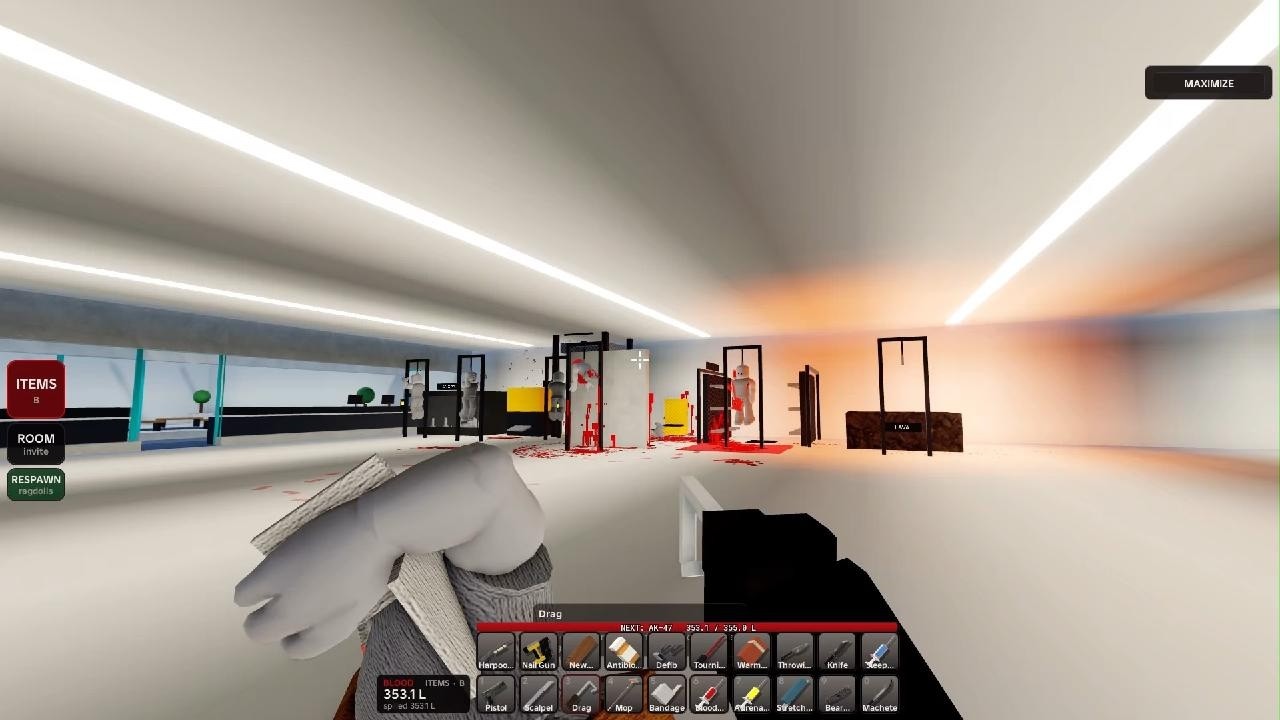
This moment supports the controlled treatment comparison by showing bandages being used before Medicine and Chest Seal are tried, while their effects remain uncertain.
A safe Medicine test flow
Follow this sequence when the purpose is to keep a wounded Test Subject alive or compare tools:
- Inspect the subject. Identify where the injury is, whether blood is still leaving the wound, and whether the subject can still be treated. Record the starting condition in your own test notes.
- Stop the next source of damage. Put the subject behind a wall, near a chair, or in another relatively protected position. Do not apply a tool while weapons, infected threats, or uncontrolled movement are still adding damage.
- Choose the confirmed option first. If the problem is active bleeding and a
Bandageis available, use it before making a broader claim aboutMedicine,Chest Seal, orDefibrillator. - Watch more than one signal. Check whether visible bleeding changes, whether the subject remains alive, and whether it can continue to move or be observed. “No obvious blood” is not enough to call the subject fully healed.
- Compare one variable at a time. If you test another Medicine item, keep the wound location and subject state as similar as possible. Otherwise, a different injury can look like a different tool effect.
- Stop at the evidence boundary. If a tool does not produce a clear, repeatable result, record it as unconfirmed and keep the subject stable with the known option instead of declaring a revival or full cure.
This flow is useful for both solo experiments and cooperative testing. It also prevents a common error: using a dramatic item name as proof of what the item does. In Blood Lab, the target’s state and the observed outcome matter more than the label.
Wounds, rooms, and blood loss
Medicine is tied to the wound system. The location of the injury affects what you see: the available observations indicate that torso injuries can show more pronounced bleeding because the torso contains more blood vessels, while visible head bleeding may appear lower in some situations. That observation does not establish that a particular tool is head-only, chest-only, or stronger on one location.
Use room layout to make treatment repeatable. A chair, wall, or other cover can keep the subject from being immediately exposed while you apply an item. Different rooms are useful for different tests because sight lines, movement space, and nearby hazards change. Clean the area after an experiment if blood and debris make it difficult to distinguish a new wound from an earlier one.
The order of operations should normally be: create or inspect the wound, secure the area, apply the treatment, then observe the result. If you move the subject, fire another weapon, or allow a second injury during the treatment window, you may no longer know which event caused the change. For a reference test, a short pause is more valuable than a dramatic but uncontrolled rescue attempt.
Choosing among the unconfirmed tools
The three less-certain entries still have a useful place in a test plan, but their roles should remain conditional. Chest Seal is a reasonable item to try when the subject has a chest-related injury, because its name suggests that use; the evidence does not confirm that it closes the wound, stops blood loss, or restores health. Medicine may be a general treatment item, but the available observation that someone should “put medicine” does not establish a quantity, duration, or list of compatible wounds.
Defibrillator should be treated as an emergency experiment, not an automatic revive button. The item is listed among Medicine tools and is mentioned alongside healing, but there is no reliable demonstration of its required target state, range, timing, or success result. Do not let a downed or dead subject determine your whole experiment around an assumed revival mechanic. First preserve a living subject with the confirmed treatment path, then test the defibrillator when you can safely observe what changes.
Reviewing Medicine and Defibrillator options for healing
This moment introduces Medicine as a way to heal Test Subjects and places the Defibrillator among the medical tools discussed in this section, without confirming its recovery effect.

These distinctions also help when an item appears not to work. The failure may mean the subject is in an unsupported state, the wound does not match the tool, the target is already beyond recovery, or the effect is simply not visible in the available observation. Without a repeatable result, the correct player-facing conclusion is “unconfirmed,” not “guaranteed to revive” or “does nothing.”
Practical limits and current conclusions
There is no confirmed automatic recovery to rely on, so plan around finding and conserving Bandage. The reported three-minute refresh is approximate, not a promise that a new item will appear exactly when the clock reaches a particular value. Check the current room and item behavior if a future update changes the cadence.
Do not equate reduced bleeding with full health. Do not assume that a Chest Seal handles every chest injury, that Medicine has a known healing amount, or that Defibrillator restores a dead or unconscious subject. The evidence supports trying these tools under controlled conditions, but not assigning them fixed outcomes.
For a normal experiment, keep at least one safe treatment opportunity available, move wounded subjects out of ongoing danger, and observe before and after each action. The subject guide helps keep the injury state and protection setup consistent while you test a treatment. That gives you the most reliable way to use Blood Lab Medicine today while leaving room for a future patch or clearer in-game behavior to settle the currently unverified mechanics.
First-time Blood Lab Medicine questions
Can Medicine items restore a subject that is already dead?
The current evidence does not confirm that Bandage, Medicine, Chest Seal, or Defibrillator can restore a dead subject. Preserve a living, treatable subject first, and treat any revival attempt as unverified until the game shows a repeatable result.
Should I use Chest Seal on every injury?
No. Its name makes a chest-related injury a reasonable test case, but the exact effect is unconfirmed. Do not assume it stops all bleeding or restores health; use the confirmed Bandage response for active bleeding when the subject is still treatable.
SourcesReviewed November 13, 2026
https://bloodlab.wiki/guides/how-to-heal/